Wedding Dream: A Handwritten Font That Fits Real Creative Workflows
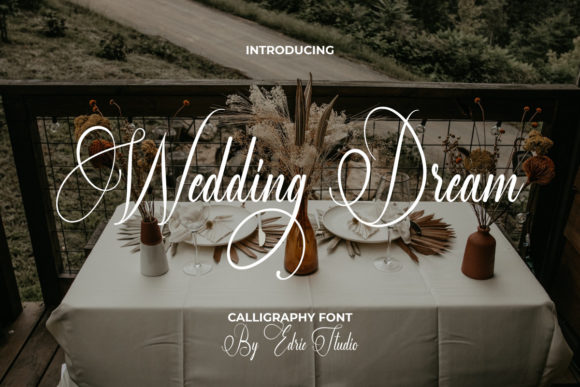
Wedding Dream isn’t just another decorative typeface—it’s a functional design asset built for people who plan, create, and deliver with intention. Whether you’re designing wedding invitations for a client, crafting a heartfelt thank-you card for your own celebration, or building a brand identity that balances warmth and polish, Wedding Dream delivers consistent elegance without sacrificing usability. Its charm lies in how naturally it integrates into actual creative processes—not as an afterthought, but as a deliberate, reliable tool.
What Wedding Dream Is—and Where It Fits in Your Workflow
Wedding Dream is a PUA-encoded handwritten font designed for clarity, versatility, and expressive nuance. Unlike many script fonts that prioritize flourish over function, Wedding Dream maintains legibility at small sizes while offering rich stylistic options—swashes, alternate glyphs, ligatures, and contextual variations—that respond intelligently to your input. Because it’s PUA encoded, every character—including discretionary swashes and stylistic alternates—is accessible directly from your keyboard without relying on OpenType features or specialized software. That means you can use it in tools like Canva, Adobe Express, Google Docs (with compatible add-ons), or even basic word processors—no technical setup required.
This encoding makes Wedding Dream especially useful early in a project, when speed and consistency matter. For example, a freelance designer might start mockups in Figma using Wedding Dream to establish visual tone before finalizing assets in Illustrator. A small business owner launching a boutique stationery line can draft product names, taglines, and packaging copy in Word or Pages—knowing the same font will render correctly across platforms and devices.
Using Wedding Dream Before, During, and After a Project
Before a project begins, Wedding Dream helps define aesthetic direction and set expectations. When pitching to clients, embedding it into mood boards or style guides signals attention to detail and emotional resonance—especially for lifestyle, wellness, or service-based brands where authenticity matters. Educators preparing workshop handouts or bloggers drafting seasonal content calendars often use it to preview typographic hierarchy before committing to final layouts.
During execution, its flexibility supports iterative refinement. You’re not locked into one version of a word or phrase: if “forever” feels too plain in standard glyphs, swap in a swashed “f” or extended terminal on the “r” with a single keystroke. This responsiveness reduces back-and-forth with clients or collaborators—fewer rounds of revision, clearer visual communication, faster approvals. Marketers building email campaigns or social graphics benefit from this immediacy: test two versions of a headline side-by-side, each using different Wedding Dream variants, and choose based on engagement data—not guesswork.
After delivery, Wedding Dream continues to serve. Small business owners reusing invitation designs for anniversary announcements or holiday cards maintain brand continuity without redesigning from scratch. Bloggers repurposing quote graphics for Pinterest or Instagram Stories retain visual cohesion across platforms. Even educators archiving lesson materials find that Wedding Dream’s readability holds up in printed PDFs and projected slides alike—no pixelation, no rendering surprises.
Integration With Other Tools and Assets
Wedding Dream works best when treated as part of a broader system—not isolated, but connected. Pair it with clean sans-serifs like Inter or Montserrat for body text or captions; combine it with subtle textures or muted color palettes to avoid visual overload. In design tools like Adobe Illustrator or Affinity Designer, layer Wedding Dream text over scanned paper textures or watercolor backgrounds—the font’s natural stroke variation complements organic elements without competing.
For developers or no-code builders, Wedding Dream can be embedded via @font-face in custom websites or Shopify themes—just ensure licensing permits web use. When used alongside CMS platforms like WordPress or Notion (via browser extensions or exported image assets), it preserves tone in newsletters, resource libraries, or internal documentation—particularly helpful for coaches, consultants, or course creators who want their written voice to feel human, not templated.
Its compatibility extends to physical outputs too. Print vendors consistently report accurate color registration and crisp edge definition with Wedding Dream, whether on matte-finish invitations, foil-stamped business cards, or letterpress thank-you notes. That reliability simplifies proofing cycles and reduces costly reprints.
Practical Tips for Smoother Implementation
- Start with purpose, not prettiness. Ask: Does this use case require warmth? Personalization? A sense of occasion? If yes, Wedding Dream fits. If the goal is neutrality or urgency, choose differently.
- Test contrast early. Use Wedding Dream over light backgrounds only—never dark-on-dark unless reversed with a solid fill. Check readability at 14pt and below before finalizing any body copy.
- Organize your glyph library. Since all swashes and alternates are PUA mapped, create a quick reference sheet (PDF or Notion page) showing which Unicode point triggers which variant. Save time later when editing.
- Batch your typography decisions. Decide upfront where Wedding Dream appears (headings only? quotes only? logos only?) and stick to it. Consistency builds recognition—especially important for recurring communications like monthly newsletters or seasonal promotions.
- License with longevity in mind. Choose a commercial license if you’ll use Wedding Dream across client work, products, or digital assets you sell. One-time purchase options often include unlimited usage—no per-project fees or renewals.
Long-Term Use: Quality Control and Efficiency
Over months or years, Wedding Dream proves valuable not because it’s trendy—but because it scales. Designers reuse it across dozens of client projects without fatigue; entrepreneurs apply it to evolving brand touchpoints without needing new fonts; educators adapt it to changing curricula without retraining students on new visual systems.
Quality control stays simple: since all characters render predictably across devices and software, there’s less need for cross-platform testing. And because it avoids excessive ornamentation, Wedding Dream ages well—unlike fonts tied too tightly to a specific design era, it remains relevant as styles shift.
Efficiency gains compound quietly. Once you’ve built templates—Canva brand kits, Illustrator symbol libraries, Figma text styles—you reduce decision fatigue. No more debating which script font “feels right” for each new card or banner. Wedding Dream becomes second nature, freeing mental bandwidth for strategy, storytelling, and connection.
Final Thought: Let the Font Serve the Work
Wedding Dream feels equally charming and elegant because it was made to support—not dominate—your message. It doesn’t ask you to contort your process around its limitations. Instead, it adapts: to your tools, your timeline, your audience, and your standards. Whether you’re planning a wedding, launching a course, designing packaging, or writing a personal note, it meets you where you are—and helps you deliver something that looks intentional, feels genuine, and holds up over time.